Analyzing mise‐en‐scène: Glass Onion
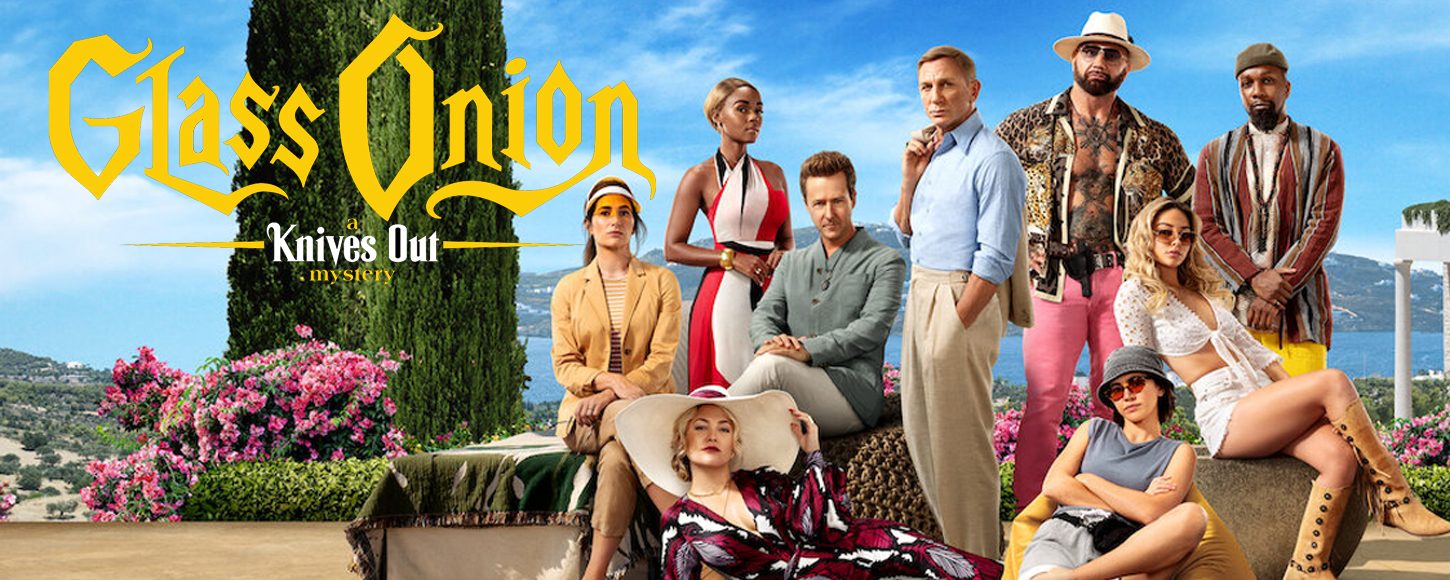
Glass Onion is a Mystery/ Thriller Movie. I wanted to analyze the mise-en-scene because it helps express a films vision by generating a sense of time and space, as well as setting the mood. Once I find out how other movies appeal to Mike-en-scene then I could take notes for my Movie introduction.
| What to think about | Description | Comment |
Setting/ Location |
When/where is it set. Is it filmed on set or on location? Does the setting tell us anything about the genre. | This scene takes place on a private island in Greece, where It housed the cast and their families for the majority of the shoot. In the scene they are outside of the mansion in the dark, on stairs.
| As the primary place to gain success in the film or music industry, the location of Greece perfectly matches the plot. The setting of the scene creates a suspenseful mood and shows how to genre is mystery/action film. The beautiful rich background of the private island and vivid colors of the water creates an eye-capturing moment and showcase how rich the characters are. |
Props |
What props have been included? Do they tell you anything about the setting or genre? Connotations? | The props in this scene include a gun, stairs, glass, glove, Mona Lisa painting, statues...
| All of these props can relate back to the genre, as they emphasize the idea of drama and mystery. The gun represents the violence in the scene/ death and the glove represents a hidden identity adding to the mystery. These props hold negative connotations; they highlight the death and darkness within the scene. |
Lighting |
Natural or artificial? Where is it coming from? Shadows? What atmosphere is created? | The white light is only on the characters when filming or on an object. In one shot the light seems to be coming from a helicopter as if they are scoping out the area. The atmosphere is dark and suspenseful.
| The lighting not only emphasizes the characters, but it also emphasizes the tense atmosphere. The light coming from a “helicopter” adds to the mystery of the scene and represents the hunt for the killer. The shadows add realism to the scene. In one shot light is only shown on the gun to emphasize it and foreshadow the upcoming clip of someone getting shot. Makes the scene more suspenseful. |
Costume & Makeup |
What are the characters wearing? Does this tell us anything about them, the relationships between them, or the setting? | Both actors are wearing a white/beige suit jacket and the lady is wearing a white bow around her neck. The makeup is clean and gives her a glass appearance. Blood is used when she is shot on her white suit.
| The corresponding white outfits represent how they are good, innocent people. The white bow symbolizes innocence, which is taken away by the dark, red blood when shot. These two colors clash as red symbolizes death and danger. |
Movement |
What does body language and movement tell us about the characters emotions? What kind of atmosphere is created? | The characters are in one place during most of the scene as they are talking to one another. Their arms are thrown up as if confused and their body is tensed up. | The characters move their arms a lot to convey confusion and distress while talking to each other urgently. This
|
Diegetic Sound |
Describe the characters’ voices and sounds made by objects in the scene. What do they add to the meaning of the scene? | The two characters speak throughout most of the scene. The sound effects within this scene include the footsteps, ruffling of clothes, clicking, gunshot, glass shattering, objects dropping.. | The sound effects create a tense atmosphere. The sound effects add to the realism of the scene and draw attention to the character's movements. Glass shattering and the gun shots make the scene dark. |
Framing & Composition | What is included in the scene. How are objects/people positioned in the frame and in relation to each other. Are we seeing things from one person’s point of view? | The director uses a two-person long shot for most of the scene. There are also mid-shots, close-ups, zoom-ins, and pan. There is also a standard focus pull on the gun and a deep focus. | The frequent use of the two-person long shot shows the full interaction between the two characters and gives the audience insight into their intense, dramatic conversation. The mid-shots draw attention to their facial expressions, physical interactions, and body language. The continuous shot is used to show what that is happening within the scene. The positioning of the characters emphasizes the dramatic conversation. Lastly, the standard focus pull on from the people to the gun foreshadows what is about to happen and emphasizes the scene. |

Comments
Post a Comment